
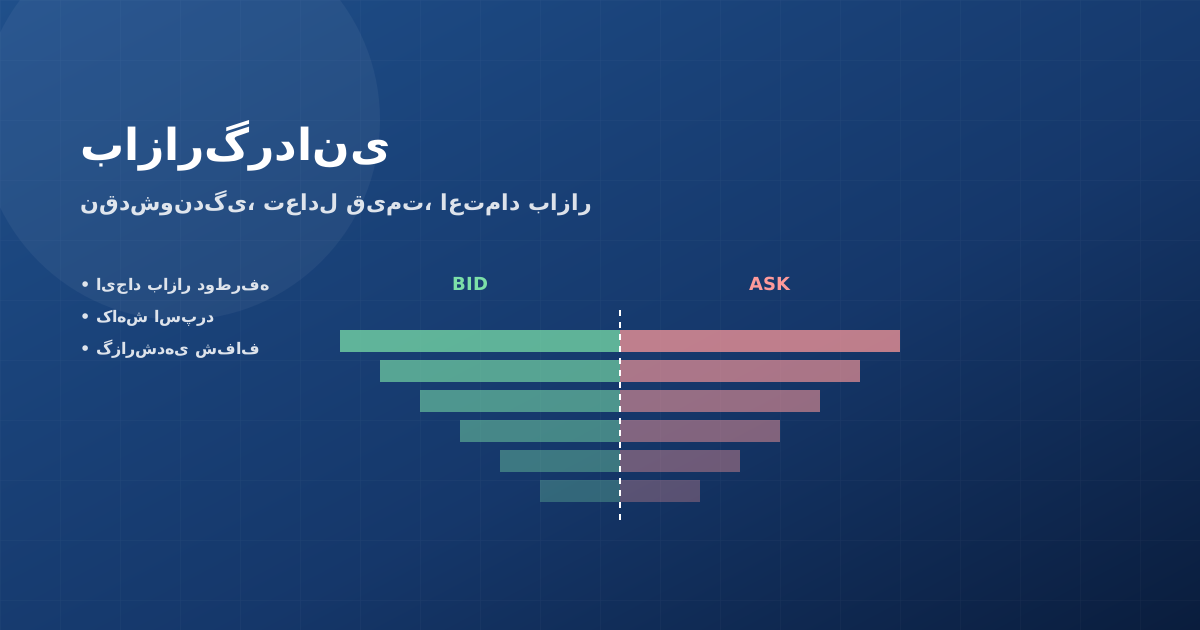
What Is Market Making?
Market making is the process by which a financial institution commits to providing simultaneous bid and ask quotes for a listed symbol throughout trading hours. The primary goal is to create sustained liquidity, narrow the spread and dampen emotional volatility that disconnects price from intrinsic value.
Without a market maker, a holder of a thin-volume symbol might wait hours or days to exit. A market maker compresses that wait into seconds.
Core Duties of a Market Maker
1. Two-Sided Market
Posting buy and sell orders simultaneously, with a committed minimum spread.
2. Liquidity Management
Maintaining meaningful order size so investors can transact without significant price impact.
3. Volatility Containment
Acting as a counterweight during euphoric or panic moves, pulling price back toward fair value.
4. Transparent Reporting to Issuer
Monthly, quarterly and annual reports covering compliance with obligations, spread analysis, market depth and material developments.
Benefits for Stakeholders
- For shareholders: fast entry/exit and lower transaction costs
- For issuers: stronger symbol attractiveness, better credibility and easier secondary offerings
- For the market: higher efficiency, deeper books and reduced non-fundamental volatility
Kahkeshan's Specialised Approach
Kahkeshan's edge in market making is its rigorous understanding of intrinsic value. Our process runs in three steps:
- Periodic fundamental analysis: financial statements, industry outlook, revenue structure and key risks — feeding a fair-value model.
- Market-making strategy design: target spread, order size and inventory limits aligned with the symbol's characteristics and the SEO-approved market-making agreement.
- Monthly monitoring & reporting: an operational dashboard for the issuer, with KPIs such as obligation compliance ratio, average spread and market depth.
Combining fundamental analysis with disciplined execution means our market making does more than add liquidity — it pushes price toward true value.
Which Companies Need a Market Maker?
- Listed companies with low symbol liquidity
- Issuers preparing for a secondary offering or capital increase
- Companies aiming to enter major indices via better liquidity rankings
- ETFs and other tradable funds
Comments & Reviews 0