
What Is Fundamental Analysis?
Fundamental analysis is a structured process for assessing the intrinsic value of a security through economic, financial and qualitative factors. The end question is simple: does today's price reflect the asset's true value? Below intrinsic value → opportunity. Above it → caution.
Technical analysis tells us *when* to buy. Fundamental analysis tells us *what* — and *why*.
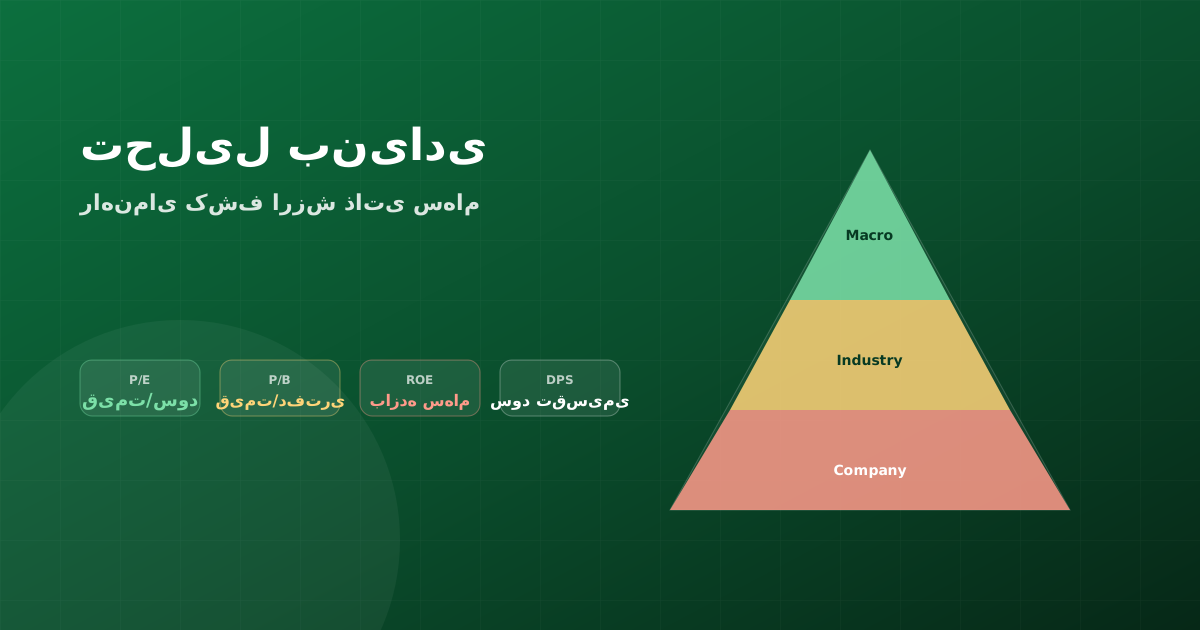
The Three Levels (Top-Down)
1. Macro Analysis
Variables affecting the whole market:
- Inflation and central-bank policy
- FX rate and balance of payments
- GDP growth and business cycles
- Commodity prices (oil, base metals)
2. Industry Analysis
Industry positioning via tools like Porter's Five Forces:
- Rivalry among existing players
- Threat of new entrants
- Bargaining power of suppliers and customers
- Substitute products
- Industry life cycle (emerging, growth, maturity, decline)
3. Company Analysis
Financial statements, management quality, durable competitive advantage and growth outlook.
Key Financial Ratios
Valuation
- P/E — what an investor pays per unit of current earnings
- P/B — market price vs. book value of net assets
- EV/EBITDA — useful for cross-industry comparison
Profitability
- ROE — efficiency of capital deployment
- ROA — profitability relative to total assets
- Gross & net margins — pricing power and cost control
Leverage & Liquidity
- D/E — reliance on borrowed funds
- Current and quick ratios — short-term obligations coverage
Kahkeshan's Process
- Identify the durable moat: brand, scale, distribution, proprietary tech
- Estimate future free cash flow under multiple growth scenarios
- Discount to present value at a risk-adjusted WACC
- Cross-check with industry multiples and set a margin of safety
- Continuous monitoring — refresh the target price after each quarterly report
Common Mistakes
- Anchoring on a single ratio (e.g. low P/E alone)
- Ignoring earnings quality — operating vs. non-operating profit
- Forcing optimistic forecasts into the model
- Overlooking regulatory and structural industry risk
At Kahkeshan, every fundamental report is reviewed by senior analysts before publication to close blind spots.
Comments & Reviews 1